

India Went Organic. Did The Farmers Win?

Centre Dodges Legal MSP Question, Hides Behind Procurement Figures
August 27, 2026
13 Years Later, Government Finally Wakes Up to KVK Crisis
September 9, 2026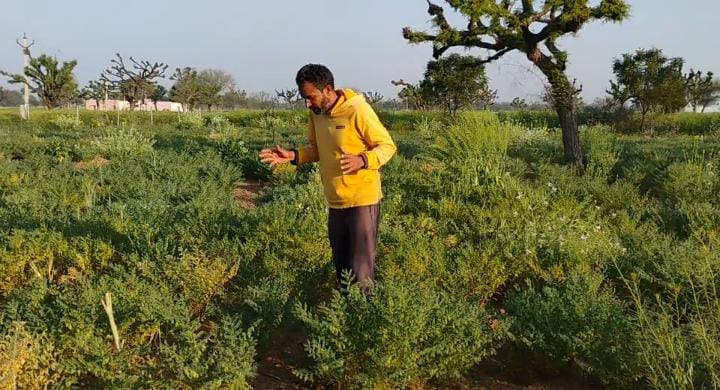
Behind the government’s impressive numbers lies a harder question: who stayed, who earned, and who walked away.
08 Sep 2026 | Nirmesh Singh
India’s organic farming story looks impressive.
There are more farmers in government-supported programmes. Thousands of farming clusters have been created. The area under certification has expanded. Public spending has increased. There is even a dedicated digital marketplace designed to connect organic farmers with buyers.
On paper, it looks like the beginnings of a transformation.
But agriculture is rarely judged on paper.
For a farmer, the test is much more immediate. The crop has to survive. The yield has to be sufficient. The cost of cultivation has to make sense. And at the end of the season, somebody has to buy what has been produced.
That raises a question that sits awkwardly beneath India’s organic-farming success story:
Are farmers actually staying in organic farming—and are they earning more from it?
The government has strong numbers to present.
Under the Paramparagat Krishi Vikas Yojana (PKVY), 52,289 clusters covering nearly 14.99 lakh hectares had been developed, involving about 25.30 lakh farmers, according to government data available in early 2025. Between 2015 and January 2025, the government reported releasing more than ₹2,265 crore under the scheme.
These are substantial numbers. They demonstrate that the machinery of policy implementation is working.
But there is an important difference between saying that a farmer has been brought into a government programme and saying that the farmer has successfully transitioned to organic agriculture.
The first is an administrative achievement.
The second is an economic and agricultural one.
And the difference between the two could determine whether India’s organic-farming push becomes a lasting transformation or another well-intentioned policy experiment.
India’s National Programme for Organic Production reported around 2.25 million hectares of certified organic farmland in 2024-25, with another 1.71 million hectares undergoing conversion.
Again, the direction is clear: organic agriculture has expanded.
But India’s agricultural landscape is enormous, and certified organic land still represents a relatively small share of the country’s total cultivated area.
More importantly, the transition itself can be difficult.
A study by Punjab Agricultural University, covering research conducted between 2020 and 2024, found that organic farmers faced significant practical problems. About 36% identified labour requirements as a major difficulty, while 31.5% reported marketing problems. Weed management was cited by 14.3%, and 9% reported reduced yields. The study found an initial yield decline of about 9%.
That number may sound manageable in a policy document.
It can look very different from inside a farmhouse.
For a large farmer with savings, diversified income and access to markets, a temporary decline in production may be something that can be absorbed.
For a small farmer dependent on one or two harvests to pay household expenses, repay loans and finance the next crop, a decline in yield can become a serious financial risk.
This is where the story becomes less about organic farming as an idea and more about organic farming as a livelihood.
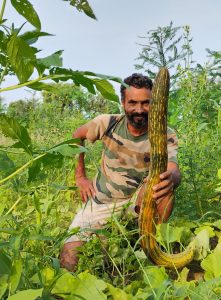 And this is also where Umesh Jhajharia enters the story.
An Army veteran and farmer from Rajasthan’s Jhunjhunu district, Jhajharia says he has been farming without pesticides for the past 11 years.
He is not someone who can simply be dismissed as an opponent of natural farming.
In fact, he argues that soil degradation is one of the strongest reasons farmers need to rethink chemical-intensive agriculture.
But his criticism of the way natural farming is being promoted is unusually sharp.
“Governments are the biggest scammers. This is particularly true in India. The biggest scam promoted by the government is natural farming,” he says.
He also says he wants his name removed from the National Mission on Natural Farming (NMNF) website’s list of “Farmer Master Trainers of Natural Farming.”
His criticism extends to the scientific establishment as well.
“Most scientists in India in this category are here simply because they have degrees, diplomas or certificates—not because of their research or their actual work,” he argues.
These are serious allegations and should be understood as Jhajharia’s assessment, not as independently established facts.
But his anger points towards a question that is larger than one farmer’s disagreement with government policy.
What exactly qualifies as evidence in India’s natural-farming movement?
Is a government certification enough?
Is a farmer testimonial enough?
Is a successful-looking field enough?
Or should claims about soil health, microbial activity, nutrient density, pesticide residues and farm income be subjected to the same demanding standards of measurement expected in other areas of agricultural science?
For Jhajharia, the answer is clear.
Measure it.
His interest in natural farming begins not with a recipe or a slogan, but with the soil.
“I stopped using pesticides 11 years ago,” he says.
On his farm, he removes only the grain or fruit from the field and allows the remaining crop residue to decompose there. He says he sometimes spends money from his pension to bring additional organic matter to the farm because he considers soil organic matter central to maintaining soil health.
For him, this is the starting point of the natural-farming debate.
The question is not simply whether a farmer has stopped using chemicals. It is whether the soil can continue supplying the crop with what it needs.
Jhajharia argues that farmers are sometimes told that if they stop applying inputs for several years, the soil will eventually become conditioned and nature will take care of the rest.
He questions whether such a blanket assumption can hold when soils begin with very different levels of nutrients, organic matter and biological activity.
A degraded soil and a healthy soil do not start from the same place.
A rain-fed farm and an irrigated farm do not face the same constraints.
A wheat farmer in Punjab does not operate in the same ecological and economic environment as a cotton farmer in Maharashtra or a horticultural farmer in the Northeast.
For Jhajharia, natural farming should therefore not become a collection of rituals detached from measurable soil science.
That raises another uncomfortable question for policymakers:
If the government wants farmers to change the way they farm, who pays when the transition goes wrong?
The government does provide financial assistance under PKVY for organic inputs, certification, training and capacity building.
But subsidies cannot automatically eliminate the economic risks of cultivation.
Organic farming can require more manual labour, particularly for weed control. Farmers may need new knowledge about soil fertility and pest management. Certification can be complicated. Organic produce may require separate storage and transportation.
And above all, farmers need buyers.
The farmer’s question is much simpler than the language of government programmes:
“If I grow organic, who will buy it, and how much will I get?”
That question may ultimately matter more than the number of clusters created or the amount of money released.
A farmer may accept lower yields for a period if the long-term economics compensate for the risk.
But if yields fall, labour costs rise and there is no dependable price premium, the incentive to remain organic becomes much weaker.
This is particularly important for small and marginal farmers, for whom the economics of transition cannot be separated from the economics of survival.
Jhajharia’s own experience points to another weakness: the gap between consumer demand and a reliable supply chain.
He recalls recently trying to source around 50 kg of onions. Although he had several farmer contacts, he says he could not find the quantity he wanted under the conditions he was looking for.
He was prepared to accept that the onions might have been grown using chemical fertilisers such as urea or DAP. What he wanted to avoid were herbicides and pesticides.
He says he eventually had to travel roughly 20–25 kilometres and contact several people in search of the produce.
One farmer’s experience cannot be used to describe India’s entire organic market.
But it illustrates an important problem.
Demand alone does not create a supply chain.
A consumer may be willing to pay for genuinely chemical-free produce. But that consumer still needs to know where the produce came from, how it was grown, whether the claim can be verified and whether the farmer actually received the premium being paid.
India has tried to build that connection.
The government’s Jaivik Kheti portal had more than 6.23 lakh farmers and 8,676 buyers registered by December 2024.
It is an important attempt to connect producers and consumers.
But registration is not the same as commerce.
The numbers do not tell us how much produce was actually sold through the platform, at what prices, or how much additional income farmers earned because they were part of it.
For a farmer, those distinctions matter.
A buyer registered on a portal is not necessarily a buyer who has purchased a crop.
A farmer registered in an organic programme is not necessarily a farmer who remains organic.
And a hectare receiving government assistance is not necessarily a hectare generating a higher farm income.
This is where the language of success can become misleading.
Imagine a programme that moves 100 farmers into organic cultivation.
Three years later, 40 return to conventional farming because yields fell, labour costs increased or buyers disappeared.
The government could still report that 100 farmers had benefited from the programme.
But from the farmer’s perspective, the more revealing figure would be 60.
India needs that second number.
It needs to know not simply how many farmers entered organic agriculture, but how many remained after the incentives and initial support had ended.
Evidence from Haryana shows why this matters.
The area reported under organic and natural farming rose from 5,205 acres in 2022-23 to 10,109 acres in 2023-24, but subsequently fell to 8,036 acres in 2024-25. By August 2025, the reported area stood at just 1,357 acres, although the year’s sowing was still incomplete.
These figures cannot be used to claim that organic farmers are declining across India. National government programmes continue to report expansion.
But they demonstrate something important: policy enthusiasm does not automatically translate into sustained farmer participation.
That is a distinction worth examining much more closely.
Government reports naturally emphasize clusters created, hectares covered, farmers enrolled and money released.
Those are useful measures of implementation.
But they are not necessarily measures of long-term success.
The more difficult questions begin after the government programme has done its job.
What happened to the farmer’s yield?
What happened to the cost of cultivation?
What happened to labour requirements?
What price did the farmer actually receive?
What was the farmer’s net income per hectare?
And, perhaps most importantly, did the farmer remain in the system?
These are harder questions because they require long-term farmer-level tracking.
They also require the government to be willing to publish results that may not always support the success narrative.
Jhajharia would add another dimension to this measurement problem.
If a farmer is presented as a successful natural-farming example, he argues, researchers should be able to demonstrate what actually changed.
What was the soil’s organic-carbon level before the transition?
What is it now?
Did crop yields change?
Did the nutrient profile of the produce change?
What happened to chemical-residue levels?
What happened to the farmer’s income?
These questions are far more difficult than counting farmers enrolled in a scheme.
But they are also far more meaningful.
There is another complication that often gets lost in the public debate.
Organic farming and natural farming are not necessarily the same thing.
The terms are frequently used interchangeably, even though they can represent different approaches.
In Jhajharia’s understanding, conventional organic farming can still depend heavily on external inputs such as compost, organic sprays and purchased materials.
Natural farming, by contrast, should place greater emphasis on the condition and biological functioning of the soil, reduced soil disturbance and the ability of the farm ecosystem to sustain itself with minimal external inputs.
He is particularly critical of the way natural farming can sometimes be reduced to a handful of preparations and recipes.
Public discussion can become focused on products such as Jeevamrut and Ghanamrut, he argues, while deeper questions about soil structure, organic matter, microbial activity, nutrient availability and reduced tillage receive less attention.
His argument is not that farmers should simply abandon every agricultural input.
Indeed, he makes a more nuanced point:
“Chemical” does not automatically mean “bad”.
Neem extracts, for example, are chemical substances too, he notes.
The relevant question is what a substance does, how it is used, whether it leaves harmful residues and what evidence exists for its effectiveness.
That distinction is important because the public debate is often framed as a battle between “chemicals” and “nature”.
Agriculture is far more complicated.
The useful question is not whether something sounds natural.
The useful question is whether a farming practice is safe, effective, economically viable and scientifically supported under the conditions in which it is being used.
This becomes particularly important when extraordinary claims enter the conversation.
Jhajharia is sceptical of claims that certain natural-farming preparations can reliably transform soil or dramatically increase beneficial microbial activity without rigorous independent testing.
His position is essentially a call for measurement.
If a practice is supposed to improve soil organic carbon, measure the organic carbon.
If it is supposed to increase nutrient density, measure nutrient density.
If it is supposed to reduce chemical exposure, test residues.
And if it is supposed to improve farmers’ lives, measure net farm income.
There is an important caveat here.
The absence of sufficient evidence for a particular practice does not automatically prove that the practice is ineffective.
Nor does one farmer’s success prove that a method will work everywhere.
That is precisely why India needs better research.
The country needs independent, long-term comparisons of organic, natural, regenerative and conventional farming systems across crops and regions.
The research needs to follow farms over time rather than simply compare one season with another.
It needs to examine yields, input costs, labour, soil health, water use, pest pressure, nutritional quality, residues, market prices and, above all, net returns to farmers.
Only then can policymakers answer the question that matters most:
Does the farming system actually work for the farmer?
That question should not be ideological.
It should be empirical.
If a particular natural-farming system performs better in a particular region, the evidence should show it.
If an organic system reduces input costs but requires substantially more labour, that should be measured.
If yields decline temporarily and then recover after several years, that should be documented.
If farmers earn higher net incomes because consumers reliably pay a premium, that should be demonstrated.
And if farmers abandon the system because the economics do not work, that should be reported honestly as well.
India has nevertheless achieved something significant.
Organic agriculture is no longer a niche idea.
Government programmes have created infrastructure, farmer groups and certification systems, while states and farming communities have experimented with organic and natural farming on a substantial scale.
There are farmers who genuinely believe these approaches have improved their soil, reduced their dependence on external inputs and changed the way they think about agriculture.
Jhajharia is one of them.
His story demonstrates why this subject cannot be reduced either to government statistics or to government criticism.
He has continued farming without pesticides for more than a decade. He has deliberately invested in soil organic matter. He remains convinced that agriculture needs to move away from practices that degrade the soil.
But his experience also reveals the contradictions.
A farmer can support the broad idea of reducing chemical dependence while questioning the scientific claims made in its name.
A farmer can believe in soil regeneration while demanding evidence.
A farmer can reject pesticides while refusing to accept that everything labelled “natural” is automatically beneficial.
And a farmer can support a transition while questioning the government programme designed to promote it.
That may be an uncomfortable position for policymakers.
But it is precisely the kind of voice that a mature agricultural policy should be able to accommodate.
The real test of India’s organic and natural-farming programmes is therefore not whether the government can produce another success story.
It is whether the government can measure what happens after the success story is published.
Not how many farmers entered organic farming, but how many stayed.
Not how many hectares received assistance, but how much income those hectares generated.
Not how many buyers registered, but how much farmers were actually paid.
Not how many success stories appeared in government publicity, but whether those farms show measurable improvements in soil and farm economics.
And most importantly:
Not how much money the government spent, but whether the farmer’s financial position improved.
India does not need to abandon organic or natural farming because some farmers struggle with it.
Nor should every failure be blamed on government policy.
Organic and regenerative approaches may offer genuine environmental and long-term soil-health benefits, and successful models exist.
But neither should success be assumed merely because a farmer stops using chemical pesticides, receives a certificate or appears in a government video.
A farmer’s field is not a laboratory in which policy can be declared successful through publicity.
It is a business.
It is a source of food.
And for millions of families, it is the foundation of their livelihood.
The transition therefore has to work economically as well as ecologically.
The government has built a framework for organic farming.
The next test is considerably harder.
Can it build an economic and scientific system in which farmers have a reason to remain organic or natural after the subsidy, training and government attention are gone?
That will require better research, independent verification, transparent markets, reliable price premiums and long-term farmer-level monitoring.
It will also require something perhaps less measurable but equally important: a willingness to listen to farmers who support the transition but are prepared to question how it is being promoted.
Until those questions are answered with transparent, farmer-level evidence, India’s organic farming success story should be treated not as a finished achievement, but as a work in progress.
Because ultimately, the success of India’s organic-farming revolution will not be decided by the number of hectares on a government spreadsheet.
It will be decided in the field.
And by the farmer standing in it.
_________________________________________________________________________