

13 Years Later, Government Finally Wakes Up to KVK Crisis

India Went Organic. Did The Farmers Win?
September 8, 2026
PI Industries Launches New Insecticide for Chilli, Cole Crops
September 11, 2026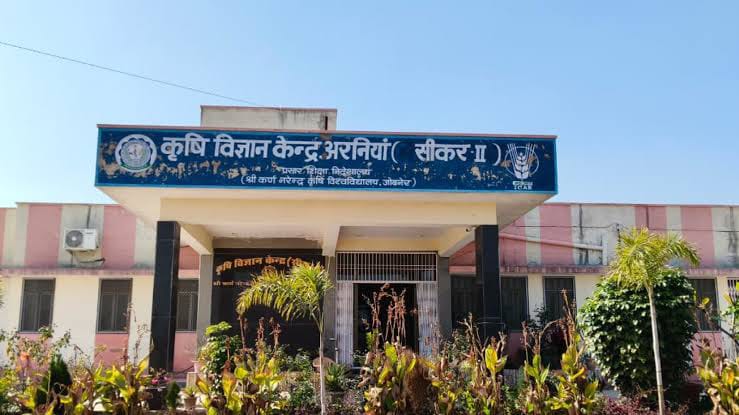
New Delhi, 09 Sep 2026, ANN: The Centre’s decision to upgrade 300 priority Krishi Vigyan Kendras (KVKs) by March 2027 has brought renewed attention to a problem that the government was warned about nearly 13 years ago: inadequate manpower, delayed funding and weak institutional support at the country’s frontline agricultural extension centres.
At a review meeting chaired by Union Agriculture and Farmers Welfare Minister Shivraj Singh Chouhan on September 7, 2026, the government asked states to ensure timely release of funds and fill vacant posts at KVKs. It also stressed that states must contribute towards the National Pension System and retirement benefits of KVK employees.
The renewed focus raises an uncomfortable question: why has it taken the government 13 years to act on institutional weaknesses that were already clearly identified in 2013?
The Indian Council of Agricultural Research’s (ICAR) High Power Committee on Management of Krishi Vigyan Kendras had, in its 2013 report, made specific recommendations on recruitment, staff stability, financial management and employee benefits. The committee said host institutions should ensure recruitment against all sanctioned posts and recommended that KVKs should not be approved or receive annual grants unless the concerned state government agreed to fill all sanctioned positions.
It also recommended that KVK employees should not be transferred for at least five years, while calling for stronger promotion systems and post-retirement benefits such as gratuity and a contributory provident fund.
The continuing crisis also exposes a serious accountability gap between the Centre and the states. The 2013 ICAR committee had already placed clear responsibility on host institutions and state governments to ensure recruitment against sanctioned posts and provide the financial support required to keep KVKs functional. Thirteen years later, the Centre is once again asking states to fill vacancies, release funds on time and meet pension and retirement obligations. This raises a fundamental question: what happened to the recommendations made in 2013? If sanctioned posts remained vacant, funds continued to be delayed and employee benefits remained unresolved, the failure was not simply one of policy design but of implementation. The Centre may have taken too long to act on an old warning, but states and host institutions also cannot escape scrutiny for allowing deficiencies identified more than a decade ago to persist.
The stakes are high. India now has 731 KVKs covering 638 rural districts. These centres are among the most important links between agricultural research and farmers, providing training, conducting field demonstrations and helping farmers adopt new technologies.
An assessment by the National Institute of Rural Development and Panchayati Raj, cited by ICAR, found that an average KVK reached 43 villages and around 4,300 farmers. Among farmers adopting technologies promoted through KVKs, 42 per cent reported increased productivity and 33 per cent reported higher crop income. About 20 per cent also reported reduced labour or effort.
However, these figures represent outcomes reported by farmers who adopted technologies through KVKs and should not be interpreted as evidence of a nationwide rise in farm incomes.
Government assessments have also revealed significant performance gaps among KVKs. Around 43 per cent of centres were placed in category A, 48 per cent in category B, 8 per cent in category C and 1 per cent in category D. Vacant positions and incomplete or new infrastructure were among the problems identified in the lower-performing categories.
The latest initiative proposes to upgrade infrastructure and logistics at 300 priority KVKs by March 2027. Detailed project reports have been received from Maharashtra, Gujarat, Goa and Chhattisgarh, while other states are at various stages of preparation.
But infrastructure alone may not solve the problem. The government has again had to ask states to ensure smooth and timely fund flow to Agricultural Technology Application Research Institutes and KVKs. Delayed funding can be particularly damaging in agriculture, where training, demonstrations and technology interventions must coincide with specific crop seasons.
The Centre is also planning entrepreneurship and skill-development centres in all KVKs by December 2028. KVKs are additionally being assigned responsibilities under district-specific initiatives, including the Pradhan Mantri Dhan-Dhanya Krishi Yojana. But the larger concern remains: a 13-year-old warning about vacancies, funding and staff stability should not have needed another government review meeting to become an urgent priority.
_______________________________________________________________________________