

Rising Farm Land Values From Highway Projects Hide the Harsh Truth of Fading Farm Incomes

Tripura considers dedicated auction centre for pineapples
December 5, 2025
Delhi to Digitise Entire Agricultural Framework, Farmers to get digital identity
December 14, 2025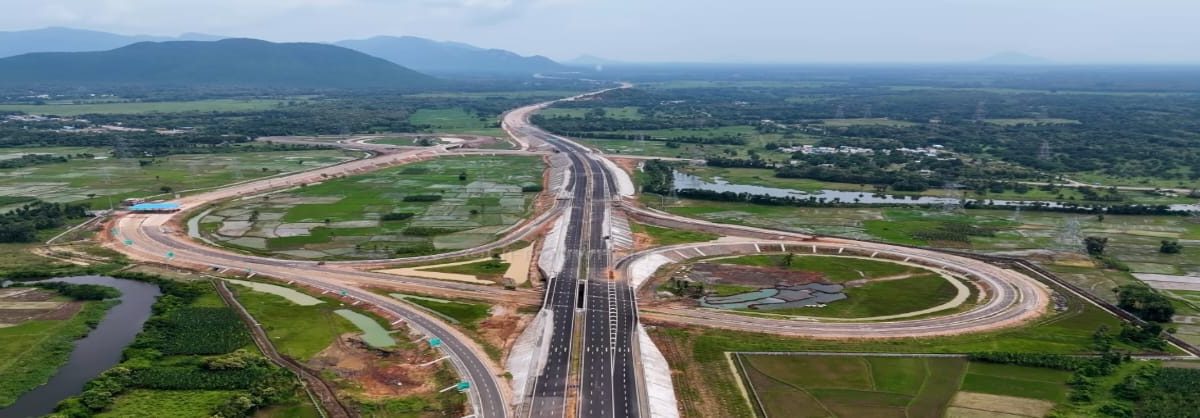
MoRTH says farmers are happy due to surge in land prices along the Raipur–Vizag Economic Corridor project.
New Delhi, 07 Dec 2025 |Nirmesh Singh
As India’s agricultural economy continues to strain under low farmer incomes, a new trend is emerging across rural India: many farmers now increasingly view their land not as a productive inheritance, but as the only appreciating asset they possess.
While ministries like Agriculture & Farmers Welfare formulate policies aimed at boosting farm output, it is often other ministries — roads, infrastructure, industries — that end up shaping the economic realities of rural households in more immediate and tangible ways.
In an official press release, the Ministry of Road Transport & Highways recently highlighted how its Raipur–Vizag Economic Corridor project has spurred land prices. The corridor cuts across forest belts, mineral zones, and hilly districts — many of them regions where farming has long been fragile and income growth stagnant.
For several farmers, the sudden spike in land value brings short-term relief but also raises long-term questions about the sustainability of agriculture itself.
A farmer quoted in the ministry’s release said his land, once valued at around ₹15 lakh per acre, now commands nearly ₹1.5 crore. “Farmers here are genuinely happy,” he said — a reflection less of agricultural prosperity and more of desperation turning into opportunity.
Another resident from Vizianagaram shared a more sober perspective. “At first, we felt sad to give our land for the greenfield highway,” he said. “But now… we feel hopeful. Our land value has more than doubled, and we know this development will bring more opportunities.” His words capture a dilemma facing many rural families: when farming ceases to sustain a dignified living, selling land begins to feel like the only path toward progress.
Srinivasulu, a farmer from Jami village in Andhra Pradesh, echoed this sentiment. After parting with 1.10 acres for the project, he said the compensation was fair and the value of his remaining land had risen sharply. “Villagers are feeling happy about this upcoming highway,” he noted — a statement that points to optimism, but also to resignation.
A Deeper Crisis Behind the Smiles
Experts have been warning that while infrastructure-led appreciation of land value may benefit farmers in the short run, it also reflects a deeper structural problem. When the most reliable economic boost comes from selling land — not from tilling it — the consequence is a slow erosion of agricultural livelihoods.
As rural incomes stagnate, many farmers now view infrastructure projects as windfalls rather than disruptions. The transition from cultivators to land sellers is accelerating, often leaving future generations with diminishing farmland holdings and fewer agricultural prospects.
The growing tendency to treat land as a commodity rather than a livelihood foundation may reshape the socio-economic fabric of rural India. While highways and economic corridors promise development, they also raise an uncomfortable question: Are farmers prospering because agriculture is thriving, or because they are exiting it?
The Raipur–Vizag corridor is only one of the examples of this paradox — one where farmers celebrate rising land prices even as their traditional livelihoods slip further into uncertainty.
____________________________________________________________________________