

‘De-risking Is About Reducing Damage’: IDH’s Jagjeet Singh Kandal on Building Climate-Resilient Agriculture

El Niño threat intensifies, but India’s farm preparedness remains a question mark
November 2, 2026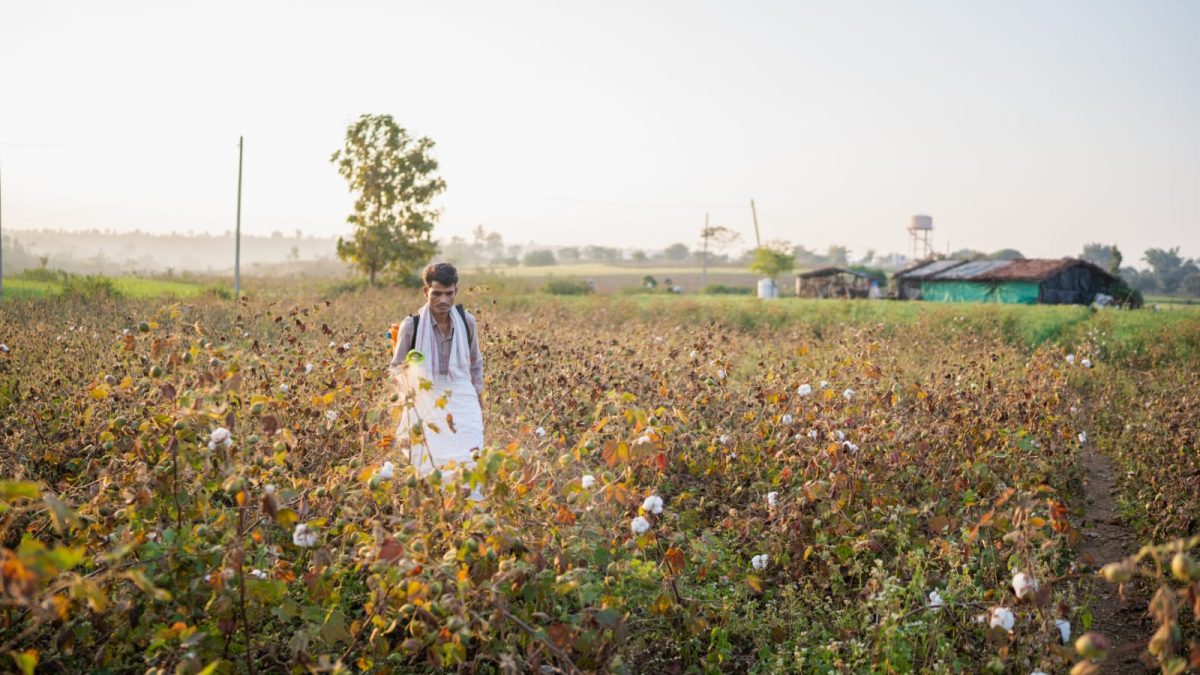
New Delhi, November 6, 2026 | Aranya Singh
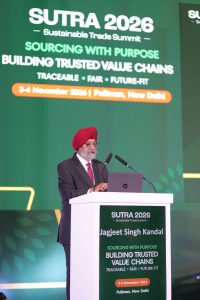 The Sustainable Trade Summit (SUTRA), recently organized by IDH in the national capital, brought together several leaders to discuss the importance of fair trade. However, the real challenge lies in translating these discussions into tangible benefits for farmers on the ground. In an exclusive interview with us, Jagjeet Singh Kandal, India Country Director at IDH, discussed the realities of sustainable sourcing, the challenges faced by smallholder farmers and the need to ensure that sustainability initiatives deliver measurable benefits to farming communities.
When asked how much of the sustainability premium actually reaches farmers, Kandal clarified that IDH does not primarily focus on premiums.
“Certain companies do pay premiums for certified products, but we work at scale,” he said.
“It is about making sure the value goes to the farmer. Rather than looking at a premium, the organization focuses on net income by reducing input costs and increasing yields,” he added.
Kandal noted that farmers often use excessive fertilizers because they lack the knowledge required to optimize their application. Improving fertilizer efficiency, he said, can reduce costs and leave farmers with more money in their pockets.
“A premium means asking someone in a company to give you a dole, and this isn’t sustainable,” he said.
He further explained that many farmers in India rely on instinct and lack awareness of soil health.
“Our soil is dead, as there is no microbial activity,” he said, adding that restoring soil health is a gradual process. It takes time to bring the soil back to life, and plants must then adapt to this new source of nutrients.
On the question of who bears the risk when smallholder farmers transition to regenerative agriculture and experience a decline in yields, Kandal described it as the biggest challenge.
He said there would always be costs associated with adopting new practices. While the government has a significant role to play, the private sector must also step in.
“I do believe it is down to the private sector to take on the risk,” he said. “They should invest in the transition costs, and when changes happen, they should share the risks.”
He cited IDH’s coffee project in Karnataka and Kerala, where companies such as HUL and JV Coffee have invested in educating farmers.
Addressing concerns that rigid traceability requirements could exclude small farmers from supply chains, Kandal said IDH acts as a neutral party that challenges businesses to ensure farmers receive tangible benefits.
“We challenge businesses,” he said. “If you are asking something from a farmer, you need to ask what you are providing in return.”
He said the ultimate benchmark was simple: whether the farmer had actually benefited from participating in the market. The focus, he added, must remain on ensuring that value is passed through the supply chain so that farmers are not left behind.
Speaking about changes in farmers’ incomes, Kandal pointed to IDH’s cotton project in Madhya Pradesh. Data from the last three years shows that farmers have recorded income increases of up to 30 per cent, while yields have increased by more than 20 per cent.
The project has also supported the creation of water ponds in the state, enabling farmers to grow a second crop.
However, Kandal cautioned that three years was a relatively short period to assess the long-term sustainability of these changes.
“We want to ensure the systems are sustainable,” he said.
Over the last six years, IDH has invested around €6 million in Madhya Pradesh, while the government has invested €10 million. According to Kandal, much of this progress has been possible because IDH helped farmers access existing government schemes that they were previously unaware of.
Kandal also shared his views on native tree species and seeds, highlighting the example of silver oak trees introduced to tea and coffee estates decades ago.
Scientific studies, he said, have shown that silver oak leaves do not decompose easily and do not contribute nitrogen to the soil. IDH is now initiating a programme to remove these trees and replace them with native species.
“If something is good for Punjab, it won’t be good for Tamil Nadu,” he said.
He said the same principle applies to seeds, emphasising the need to build confidence in indigenous seeds and locally suitable agricultural products.
On the use of hazardous pesticides, Kandal highlighted the economic realities faced by farmers.
“If a farmer has only one acre of land to feed his family, he simply can’t afford to lose 10 per cent of his crop, regardless of the warnings,” he said.
Kandal said IDH does not preach to farmers but educates them about safer practices, including the use of protective clothing, while gradually replacing harsh chemicals with biochemicals produced on-site.
He also cited IDH’s tomato project, where fertilizer inputs were reduced by 50 per cent while yields continued to increase.
Finally, addressing measures to prevent crop losses as farmers transition to climate-resilient agriculture, Kandal said the focus must remain on soil and water management.
He acknowledged that it was impossible to completely eliminate the risks posed by extreme weather events.
“If they are doing the right things, they will lose 30 per cent of their crop, and if they aren’t doing the right things, they will lose 50 to 70 per cent of their crop,” he said.
De-risking, he explained, does not mean eliminating losses entirely but reducing the extent of damage.
Kandal also stressed the need to bridge the gap between scientists and farmers. Technical knowledge generated by agricultural universities, he said, must be simplified and translated into languages that farmers can understand.
__________________________________________________________________________________