

India Unveils First Indigenous H5N1 Vaccine for Chickens

The Dangerous Gap: When Courts Uphold Press Freedom in Theory but Fail Journalists in Reality
November 18, 2026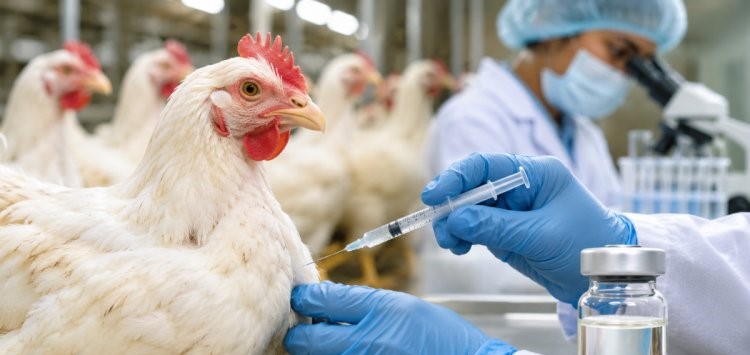
Bhopal, 23 November (ANN): India has developed its first indigenous vaccine against the deadly H5N1 avian influenza virus in chickens, marking a significant step towards strengthening the country’s poultry sector and preventing future bird flu outbreaks.
The vaccine was unveiled in Bhopal on Friday, last week by Union Agriculture Minister Shivraj Singh Chouhan, who praised scientists at the ICAR-National Institute of High Security Animal Diseases (NIHSAD) for developing it after months of intensive research under stringent biosecurity conditions.
Priced at just Rs 1-2 per dose, the vaccine is expected to make bird flu protection affordable, particularly for small-scale poultry farmers.
At the launch event, Chouhan also announced plans to establish a new laboratory in Bhopal at an estimated cost of Rs 300 crore. He said the launch was initially planned for Delhi, but he chose Bhopal to recognize the scientists and acknowledge the city as the birthplace of the indigenous vaccine.
Scientists hailed as the real heroes
Crediting the research team for its commitment and perseverance, Chouhan described the scientists as the “real heroes” behind the achievement. He compared their dedication to the discipline and sacrifice displayed by soldiers.
The team included Dr S Nagarajan, Dr Manoj Kumar, Dr C Tosh, Dr HV Murugkar, Dr Aniket Sanyal, Dr Senthil Kumar D, Dr Naveen Kumar and Dr Yogisharadhya R.
Developing the vaccine required months of rigorous work and extraordinary safety measures. Scientists reportedly sacrificed their weekends, followed extensive sanitization procedures before and after entering the laboratory, and took additional precautions to prevent contamination. Their safety protocols also involved bathing with nearly 120 litres of water daily and avoiding keeping pets at home.
India has witnessed over 500 bird flu outbreaks
India has been battling avian influenza for nearly two decades. The country’s first recorded bird flu outbreak occurred in 2006 in Navapur, Maharashtra, killing around 10 lakh chickens. Thousands of additional birds were subsequently culled and buried to prevent the disease from spreading.
The country lost approximately nine lakh chickens in 2021, while another two lakh died this year. According to Chouhan, India has reported more than 500 outbreaks since 2006.
Warning about the wider implications of the disease, the minister said the virus could spread beyond birds and potentially infect mammals and humans, making preventive measures and vaccination increasingly important.
Animal diseases cause annual losses of Rs 56,000 crore
Highlighting the economic significance of livestock and poultry farming, Chouhan described livestock as “moving ATMs” that provide farmers with a regular source of income alongside crop cultivation.
He said animal husbandry contributes around 14 per cent to India’s GDP, while the poultry sector accounts for another 1 per cent.
However, major animal diseases continue to impose a substantial financial burden on farmers and the economy. The minister estimated average annual losses from these diseases at approximately Rs 56,000 crore.
The estimated losses include:
- Foot and Mouth Disease: Rs 22,000 crore
- Lumpy Skin Disease: Rs 20,000 crore
- Brucellosis: Rs 9,212 crore
- Peste des Petits Ruminants, affecting sheep and goats: Rs 4,683 crore
Chouhan also highlighted the progress made under the National Animal Disease Control Programme, which has delivered 147 crore and 16 lakh free vaccine doses against Foot and Mouth Disease. He said brucellosis was now under control.
Recalling the 2022 Lumpy Skin Disease outbreak, he said approximately 32.8 lakh animals were infected and 1.86 lakh died. Scientists at Hisar and Izzatnagar subsequently developed the indigenous vaccine ‘Lumpi-ProVacInd’ to combat the disease.
NIHSAD expands India’s indigenous vaccine portfolio
The newly unveiled H5N1 vaccine adds to NIHSAD’s growing portfolio of domestically developed animal vaccines.
The institute has also developed indigenous vaccines against Gumboro disease, Brucella abortus S-19 Delta, Classical Swine Fever and African Swine Fever.
The latest achievement is expected to strengthen India’s preparedness against emerging animal diseases, reduce dependence on imported vaccines and provide affordable protection to poultry farmers, particularly those operating on a small scale.