

Do Bigha Zamin: Two Bighas of Land, a Lifetime of Loss

PI Industries Launches New Insecticide for Chilli, Cole Crops
September 11, 2026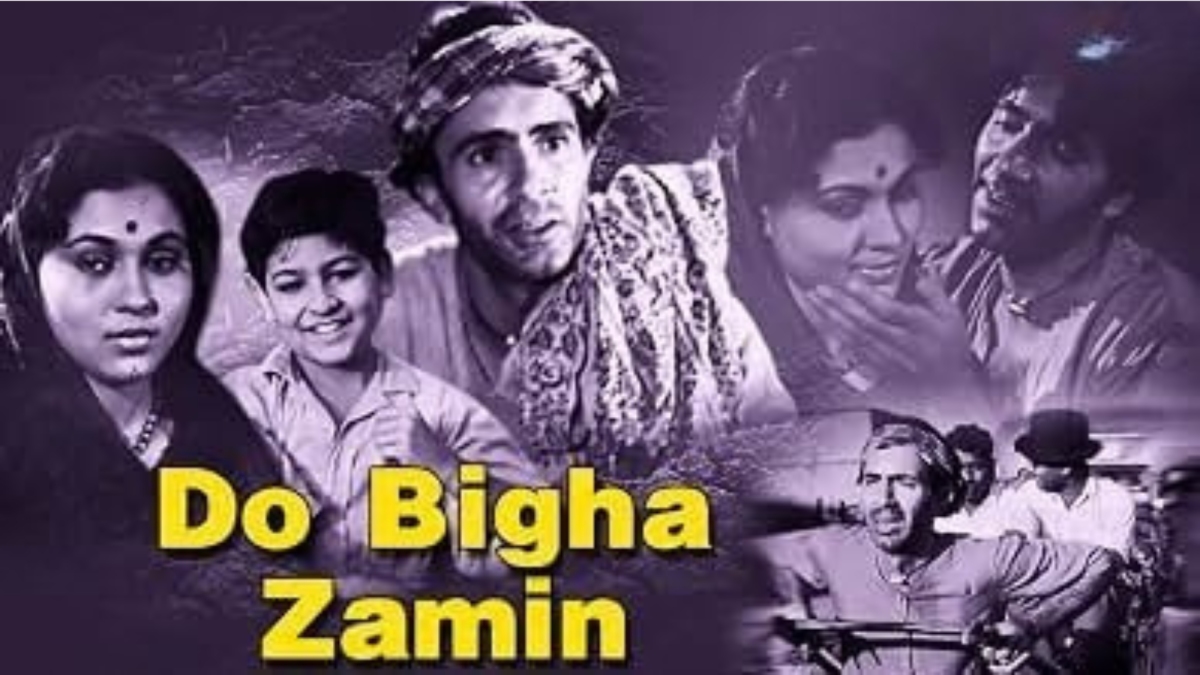
Bimal Roy’s Do Bigha Zamin (1953) remains one of Indian cinema’s most enduring portraits of farmer debt, displacement and agrarian distress. The film placed the small farmer at the centre of Indian cinema, and more than seven decades later, Shambhu’s story still resonates. India’s agriculture and policies have changed dramatically, yet many forms of agrarian vulnerability remain. Revisiting Shambhu’s journey raises a contemporary question: why, after seven decades of change, does the farmer’s struggle still feel so familiar? His story also leaves us with a larger question: what happens when a farmer loses not only his land and livelihood, but also the dignity tied to them? Do Bigha Zamin offers a powerful lens through which to examine India’s continuing agrarian crisis.
27 Sep 2026 | Aranya Singh & Nirmesh Singh
There are films that tell you a story, and then there are films that leave a piece of that story behind in your mind. Bimal Roy’s Do Bigha Zamin (1953) is the second kind. More than seventy years after Shambhu first appeared on the screen, walking across his fields with the anxiety of a man who knows that the land beneath his feet may no longer belong to him, the film still feels uncomfortably close.
Inspired by Rabindranath Tagore’s poem Dui Bigha Jomi and developed through Salil Chowdhury’s story Rickshawala, the film tells the story of Shambhu, a small farmer in rural Bengal, who refuses to hand over his two bighas of land to a zamindar who wants to build a mill. What follows is a slow, relentless unravelling: drought, debt, migration, humiliation, and a quiet dignity that refuses to die.
The film was not only critically acclaimed in India but also received international recognition. At the 1954 Cannes Film Festival, where it competed in the official selection, it received the International Prize, shared with another film. But Do Bigha Zameen matters for more than its awards.
It matters because it looked at the agrarian crisis with a clarity that many policy documents still struggle to achieve. And it matters because it changed what Indian cinema thought it could do. It made the farmer visible not merely as a symbol of rural India, but as a human being whose life was inseparable from the soil he worked.
The Agrarian Trap
The film’s central conflict is not simply between a good man and a bad man. It is between a peasant and a system that steadily removes his choices.
Shambhu is given a short period to repay his debt or lose his land. The debt is therefore not simply an amount of money. It becomes the mechanism through which his land can be taken from him. The zamindar does not simply demand money. He demands it within a deadline that Shambhu knows he cannot realistically meet.
This is the debt trap in its purest form. Nature takes one crop. The landlord takes the rest. Shambhu is not lazy. He is not foolish. He is trapped. The film makes clear that his failure is not moral. It is structural.
For Shambhu, the land is not an asset. It is his mother. When he refuses to sell it, he is not merely being sentimental. He is stating the truth of peasant life. The land holds his ancestors, his future and his dignity. The zamindar, by contrast, sees land as a commodity. He wants it for a mill. He wants to convert soil into profit.
This clash of worldviews is the film’s philosophical core. One sees land as life. The other sees land as capital. The tragedy is that the second worldview possesses the economic power to turn land from a lived inheritance into a commodity, and the institutional mechanisms through which that claim can be enforced.
The film opens with drought. The fields are cracked. The sky is empty. Then, finally, rain comes. There is a moment of hope. Shambhu’s family celebrates. But the rain does not save them. It only delays the inevitable.
This is important. The film does not blame nature alone. It shows that even when nature is kind, the system is not. The drought is a crisis. The debt is a catastrophe. One is natural. The other is man-made.
The mill is not just a building. It is a symbol of what is coming: industrialization, modernization, development. These words can sound positive in policy documents. But for Shambhu, they mean displacement. They mean the end of a way of life.
The mill may create jobs. But not for him. Not for his family. Not for the village that will lose its land.
The Farmer’s Code
There is another dimension to Shambhu that is easy to miss if the film is seen only as a story of poverty. He is poor, but he refuses to surrender his moral code. This becomes particularly clear in his relationship with his son Kanhaiya.
When Kanhaiya steals money in the city, Shambhu beats him and asks, “Kisan ka beta hoke tune chori ki?”
Why does this matter? Because Shambhu is not merely teaching his son not to steal. He is telling him what it means to be the son of a farmer. The farmer, in Shambhu’s world, may be poor. He may be exploited. He may be cheated. But he must not become dishonest simply because the world has been dishonest with him.
It is one of the quietest and most powerful statements about the character of the farmer in the film.
Shambhu refuses to let poverty become an excuse for abandoning dignity. That moral stubbornness makes his eventual defeat even more painful.
The City That Offers No Mercy
Shambhu goes to Calcutta because he has no choice. The city is supposed to be the escape. Instead, it becomes another machine of exploitation. The same helplessness, the same humiliation, the same struggle for daily bread follow him from the village to the pavement. The film refuses to romanticize the city. There is no glamour here. No easy opportunity. Only exhaustion.
The most famous sequence in the film is the rickshaw race. Shambhu, now a rickshaw puller, is forced by a heartless client to race against a horse carriage. It is a brutal scene. It is also a summary of the migrant’s condition. He must run faster than an animal while being treated worse than one.
The rickshaw is not just a vehicle. It represents labour that is human but treated as animal. It represents the body as a machine. It represents the city’s indifference to the man who pulls it.
Balraj Sahni’s preparation for the role reflected Bimal Roy’s pursuit of realism. He actually drove a rickshaw through Calcutta while preparing to play Shambhu.
Shambhu’s wife, Parvati, is not a passive figure. She stays behind, manages the household, faces the zamindar’s pressure and struggles to keep the family alive. Their son, Kanhaiya, eventually joins Shambhu in the city.
The family is scattered, but not broken. Their love for each other is the film’s only source of warmth. Shambhu’s father dies while he is away, and the news reaches him too late. He cannot even perform the last rites properly.
This is the cost of migration, not just economic but emotional. The city takes not only your labour. It also takes away your ability to be present for your family.
Cinema as Conscience
What makes Do Bigha Zamin a landmark in Indian cinema is how it tells this story. Bimal Roy was deeply influenced by Vittorio De Sica’s Bicycle Thieves, which he saw at the inaugural International Film Festival of India in 1952. It affected him deeply. He reportedly told his team that he wanted to make a film with the same starkness and realism, using locations rather than relying on studio sets.
The influence is clear: a desperate father, a child and a city that offers no mercy. But Roy does not simply copy Italian neorealism. He Indianises it. He keeps the songs, the emotional close-ups and the melodramatic turns, but roots them in real locations, real poverty and real social anger. The result is a distinctly Indian adaptation of neorealist techniques within the idioms of popular Hindi cinema.
The film is now widely regarded as an important early work in Indian neorealism and a bridge between art cinema and popular Hindi filmmaking.
Kamal Bose’s black-and-white cinematography gives the film a spare, unglamorous look. The frames do not beautify suffering. They stay with it. The black-and-white palette gives the film an airless quality, particularly in the Calcutta sequences, where light and shadow seem to conspire against Shambhu.
Balraj Sahni’s performance is central to this realism. As Shambhu, he becomes heavy with labour, quiet with worry and stubborn with dignity. He does not perform suffering for the camera. He endures it.
Hrishikesh Mukherjee’s screenplay avoids sermonizing. The film’s socialist themes emerge from the accumulated weight of its incidents rather than from explicit rhetoric. Salil Chowdhury’s music does not distract from the pain. It carries it. The songs are not interruptions. They are extensions of the film’s emotional world. They make the political personal.
The film also changed what Indian cinema thought it could do. Its success demonstrated that a socially conscious, realist film could reach a broad audience while also receiving major critical and international recognition. Its international reception helped demonstrate that Indian realist cinema could travel beyond the domestic market, a possibility that would soon be realized on an even larger scale by Satyajit Ray’s Pather Panchali (1955).
Why It Still Matters
More than seventy years later, the questions raised by Do Bigha Zamin have not disappeared.
Farmer suicides, debt, land acquisition, displacement and the widening distance between the city and the village continue to shape India’s agrarian conversation.
The specific mechanisms of agrarian distress have changed. The zamindar’s ledger may have disappeared, but crop failures, indebtedness, rising costs, uncertain incomes and other contemporary pressures continue to affect farmers and agricultural workers.
The contemporary agent of dispossession may look very different: a developer, a corporation or a state-led project.
But the underlying question remains similar.
Who bears the cost of development?
And this is where the film begins to speak to a question beyond cinema.
Seven Decades Later
India of 2026 is not the India of 1953. Zamindari was abolished. Land reforms were undertaken. Agricultural credit expanded. Irrigation grew. Procurement systems developed. Crop insurance, rural employment programmes and numerous farmer-focused schemes followed over the decades.
Rural India has changed enormously. But if so much has changed, why do some of the vulnerabilities at the heart of Do Bigha Zamin continue to return in different forms?
Debt remains a concern. Land remains deeply tied to livelihood and identity. Farmers continue to face uncertainty over income, weather, markets and the rising cost of cultivation. Migration remains an important part of the rural story.
This does not mean that nothing has changed. Much has changed. But perhaps that is precisely what makes the film worth revisiting.
A film made more than seven decades ago showed a farmer being pushed from his land by debt and development. The names, institutions and circumstances have changed. The agrarian economy has changed. Government policy has changed. Yet the vulnerability of the small farmer has not disappeared.
The question is not whether India has tried to address the agrarian crisis. It has, through decades of reforms, schemes and interventions. The harder question is whether those changes have been enough to remove the structural vulnerabilities that can push farmers towards debt, distress, migration and loss of land.
The zamindar may no longer stand at the centre of the story. The ledger may have changed. The factory may have become a road, a mine, a housing project, an industrial corridor or another form of development.
But the question of who bears the cost remains.
The Question the Film Leaves Us With
There is one question the film does not ask directly, but which becomes difficult to ignore when we watch it today.
Shambhu loses almost everything. He loses his land. He loses his money. He loses his livelihood. He is humiliated in the city, injured while pulling a rickshaw and forced to watch his family suffer. When he finally returns to the village, the land he fought so hard to save is gone. A factory stands where his family once lived and hoped to continue farming.
And yet, Shambhu does not commit suicide.
Why?
We should be careful about giving Bimal Roy an intention he never publicly stated. There is no reliable evidence that Roy explained the absence of suicide in these terms. But the film itself gives us a possible way of understanding the choice.
Shambhu keeps trying. He goes to court. He goes to Calcutta. He pulls a rickshaw. He works until his body can no longer take it. When his wife is injured, he spends the money he had struggled to save for his land to save her life.
Even after losing everything, he returns to the place where his land once stood and reaches for a handful of soil. His instinct is not to end his life. It is to hold on to it.
That distinction becomes painful when we watch the film from the present.
Today, farmer suicides have become one of the darkest manifestations of agrarian distress. The National Crime Records Bureau data shows that while 296,438 farmers had died by suicide between 1995 and 2014, in the nine years between 2014 and 2022, the number stood at 100,474. Debt, crop failure, economic insecurity, and other circumstances can intersect in ways that leave farmers deeply vulnerable.
Shambhu’s story belongs to another time, another agrarian economy and another social world. It would be wrong to draw a straight line between his experience and every farmer suicide today.
But the contrast is still worth thinking about.
What happens when the farmer’s traditional ways of enduring hardship begin to fail? What happens when land is no longer enough to sustain a family, labour no longer guarantees dignity, and debt leaves no room to recover?
Bimal Roy did not give Shambhu death as an escape. He gave him something more painful: survival after dispossession.
Perhaps that is why the ending is so haunting.
Shambhu walks away. He is alive, but the life he knew is gone.
The Broken Bargain
The film’s ending is not triumphant. Shambhu returns to the village only to find that the land has been taken and a factory stands where the family had hoped to retain its land. He and his family are left with no land to return to and no easy future to claim.
There is no neat resolution. Only endurance.
And perhaps that is what makes Do Bigha Zamin so difficult to forget.
It does not give the farmer a heroic victory. It does not give the audience the comfort of a solution. It makes us watch a man lose the one thing that gave his life meaning, and then asks us to think about what that loss really means.
In a country where the farmer is often praised in speeches and forgotten in the structures of everyday life, the act of watching Shambhu is still powerful.
The film endures not because it offers answers, but because it asks questions that refuse to disappear.
Who owns the land?
Who owns the law?
Who pays the price for development?
And perhaps, most importantly, when a farmer loses his land, what exactly has he lost?
Two bighas of soil? Or an entire world?
Bimal Roy leaves Shambhu walking away from his land. He does not show us a dead farmer. He shows us a living man who has been dispossessed.
And perhaps that is the film’s most painful warning: losing a farmer does not always mean losing his life. Sometimes it means leaving him alive after taking away the world that made that life possible.
That is the question Do Bigha Zamin leaves behind. And more than seventy years later, we are still trying to answer it.
__________________________________________________________________________